
The Infrastructure for Freight AI
You know AI models and coding tools could change the game for your company, but putting them to work means solving the carrier connectivity layer first. This famously tedious bottleneck eats up dev resources, and is a non-starter for many teams pursuing AI projects.
We built FreightFx to resolve this tension. We're building and maintaining the plumbing so you can skip months of custom development and start implementing AI in your company.
Here's how we did it:
Stable carrier connections at agentic speeds
We've distilled a decade of freight tech experience into a team of AI agents. It takes a fraction of the headcount, time, and funding required to build the connectivity layer freight software needs.
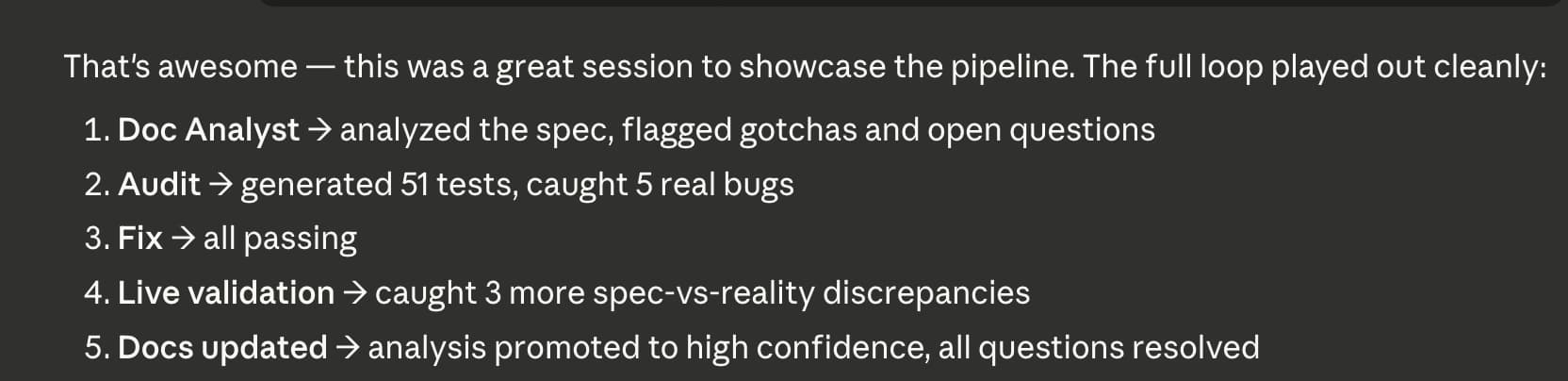
The process
-
Analyze
Read carrier API docs. Flag gotchas and open questions before any code is written.
-
Build
Generate the integration end-to-end.
-
Audit
Generate the test suite. Catch bugs the docs didn't surface. Validate against live responses.
The result

Unlocking capabilities for AI-driven development
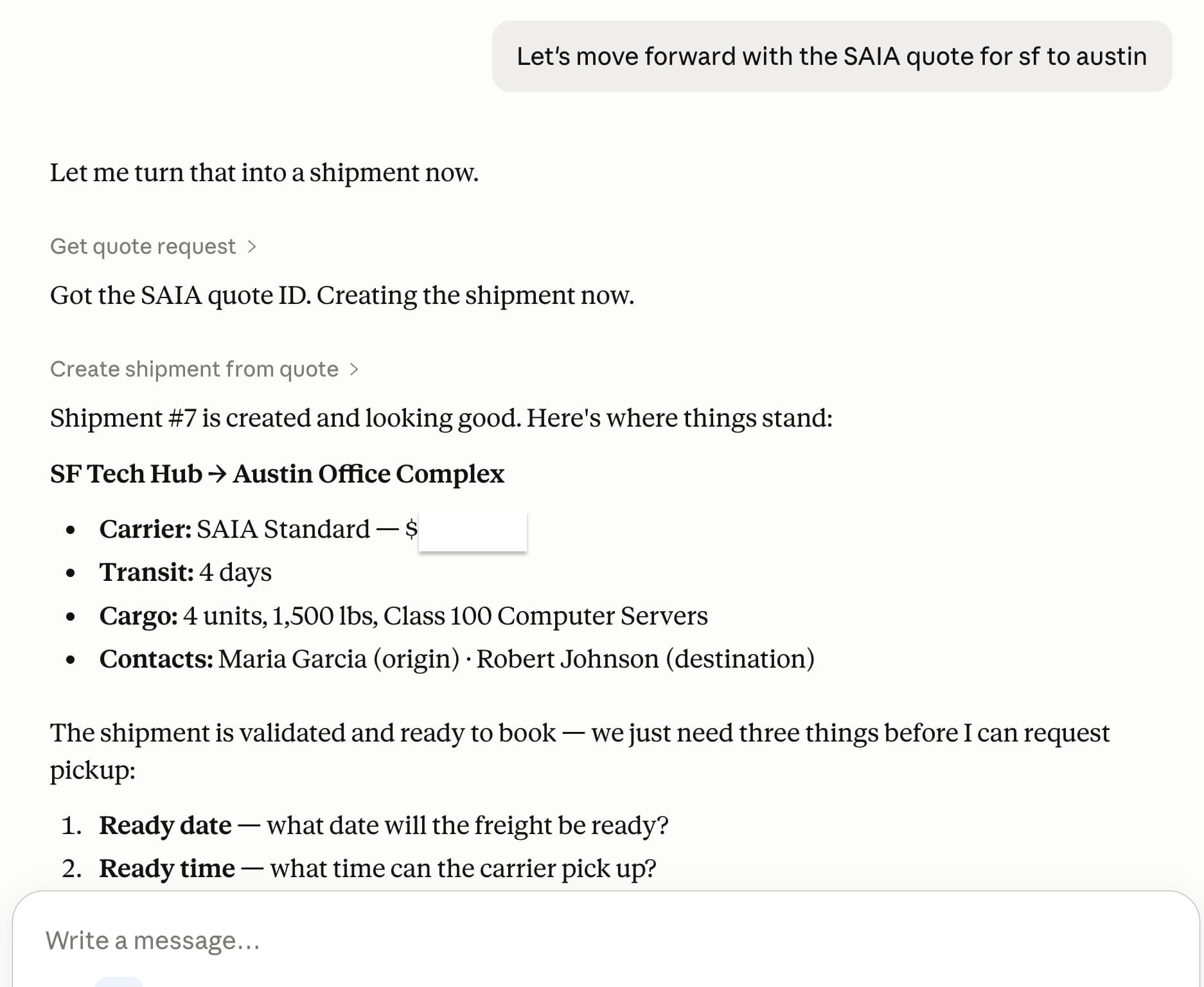
Our MCP exposes carrier functions as tools your agents can call. Start building the next generation of freight software:
- Plug into the agent platforms and coding tools you already use — Claude, ChatGPT, your favorite agent builder framework
- Design custom workflows without rebuilding the carrier connectivity step
- Launch new products with our infrastructure as the backbone
Building for tomorrow's agents
This infrastructure powers your team today, and unlocks your ability to run autonomous agents when they're ready. Long-running agents like OpenClaw and Claude Managed Agents are arriving fast. These agents will need real connections to operate in freight. That's what we built.
Apply to the Private Pilot
Get hands-on with the MCP and the team.
Ship what you've been blocked from shipping.